
Told around a pub table, the way they’re supposed to be told
A city that has been studying, arguing and occasionally poisoning its own dons for 800 years is going to collect a few ghosts. Cambridge’s are a quieter breed than London’s — more muttered about than paraded — but they are there, and in some colleges the porters will still tell you, very matter-of-factly, which staircase to avoid after midnight. Here are five of our favourites.
1. The Peterhouse Poltergeist
Cambridge’s oldest college also has its most persistent ghost. Peterhouse’s Combination Room — the senior dons’ sitting room, above the medieval Hall — has been the site of so many unexplained events that in 1997 the college Dean formally performed an exorcism. The phenomena included footsteps with no owner, a door that unlatched itself, and a cold shape observed to stand behind the Master’s chair during dinner.
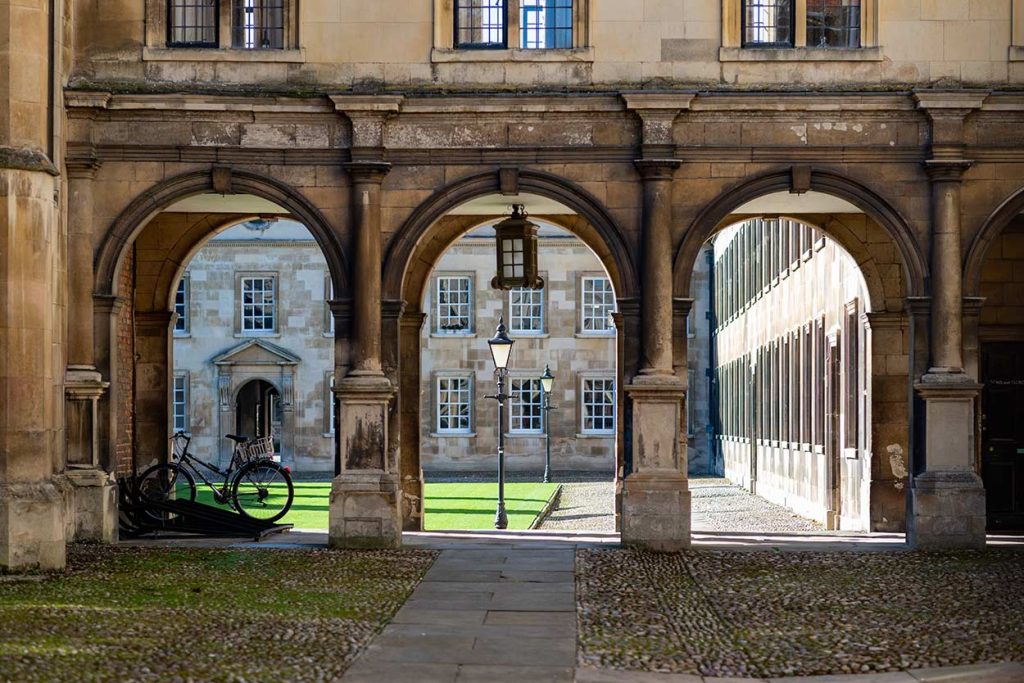
The ghost is usually identified as Francis Dawes, a seventeenth-century bursar who hanged himself in his rooms after being accused of financial impropriety. Whether or not you believe in such things, the Peterhouse exorcism — carried out with full rites by an ordained priest — was front-page news in the local paper for a week. Even the sceptics stopped going up to the Combination Room alone after dark.
2. The Corpus Christi Scholar
In Old Court at Corpus Christi — the most medieval courtyard in Cambridge, almost untouched since the 1350s — there is said to walk a young man in a dark gown, always on the staircase in the north-east corner. The story is that he was a junior Fellow in the 1630s who fell in love with the Master’s daughter, met her in his rooms against all the rules of the college, and was caught when the Master arrived home unexpectedly.
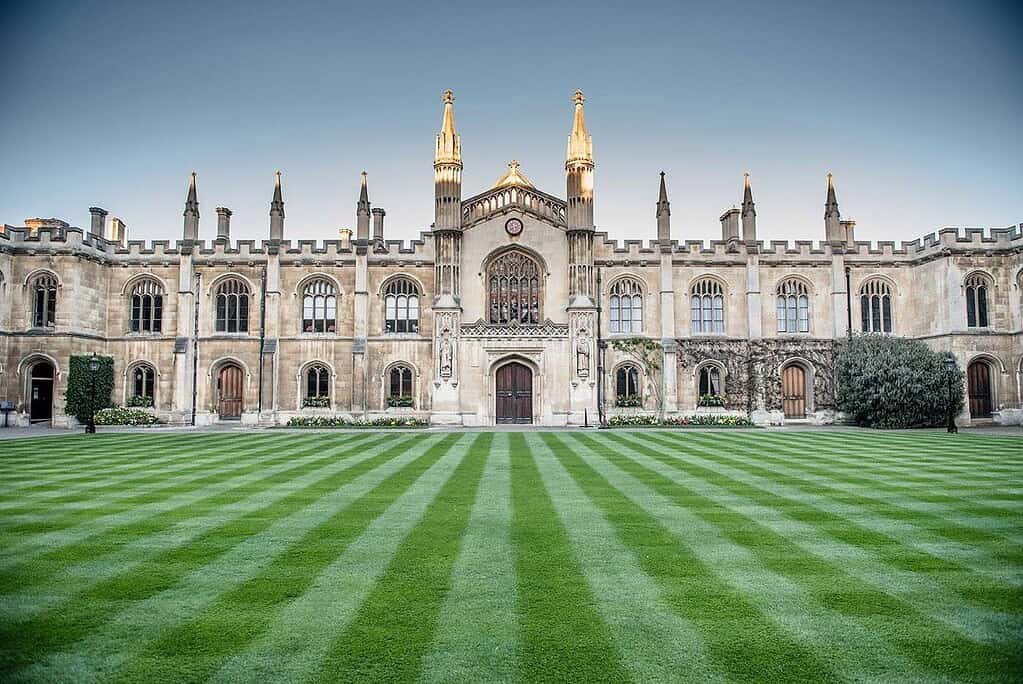
Different versions of the story end differently. In one, he hid in a cupboard and suffocated before she could come back for him. In another, he leapt from the window. Either way, the staircase is said to feel inexplicably cold, even in July, and students have reported hearing knocking from inside the panelling of rooms that haven’t been occupied in years.
3. The Chronophage and Bene’t Street
Not all of Cambridge’s uncanny figures are medieval. On the corner of Bene’t Street, outside Corpus, sits the Corpus Clock — designed by the horologist John C. Taylor and unveiled by Stephen Hawking in 2008. On top of it, visible day and night, crouches the Chronophage: a golden, mechanical locust that chews each second as it passes.
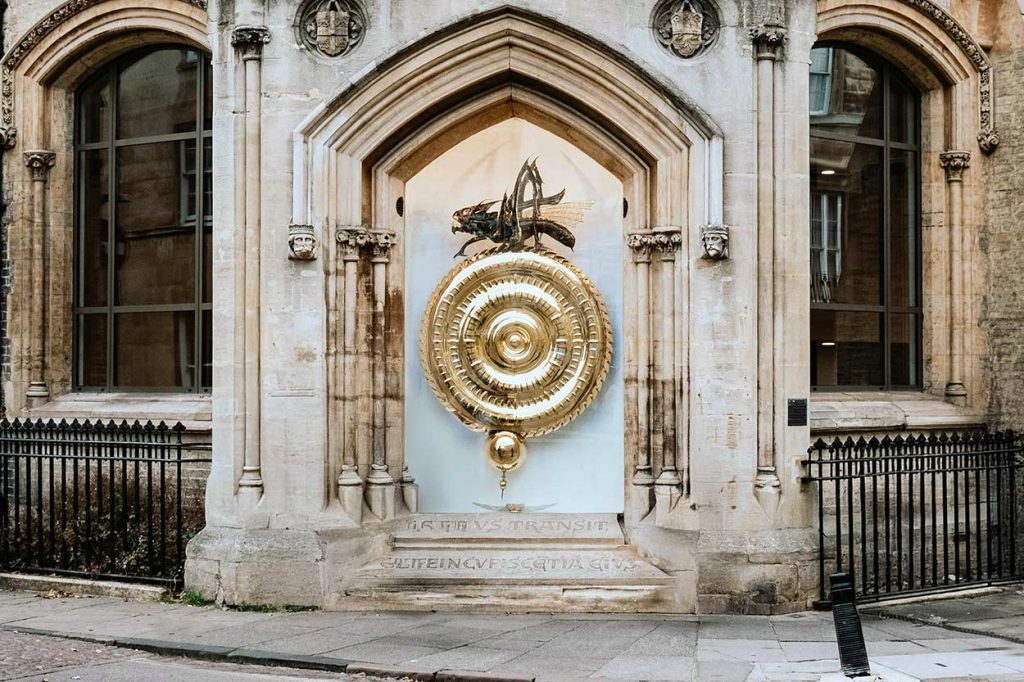
Stand in front of it after the pubs close, when Bene’t Street is quiet and the clock is lit only by its own face, and you will notice that it does not tick. Every hour, it marks time by the clatter of a chain dropped into a wooden coffin inside the mechanism. Taylor was explicit about the design: time is not a friend. The clock is not meant to comfort you.
4. The Drummer of Senate House Passage
Senate House Passage — the narrow lane between Trinity Hall and the Senate House itself — is the cut-through students use to avoid King’s Parade in term-time. After midnight, particularly in November, more than one graduate student has reported the sound of a slow, muffled drumbeat keeping pace with their footsteps, fading whenever they stop.
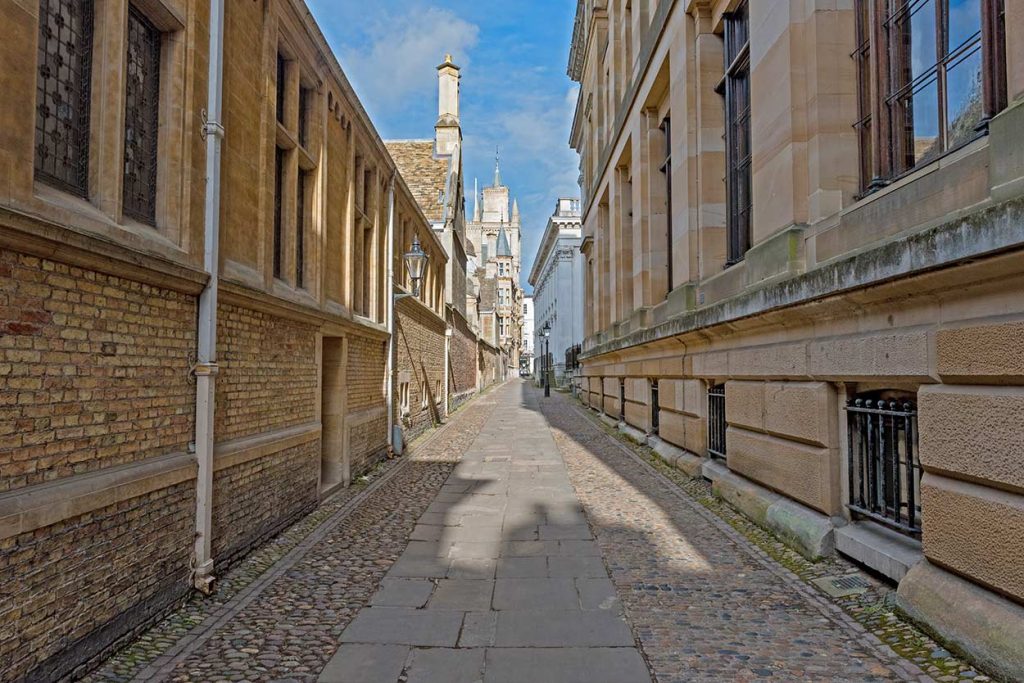
The story, such as it is, involves a Parliamentary drummer from the Civil War — Cambridge sided with Parliament, largely; the king was an Oxford man — who was beaten to death in the alley by a town mob. The drum was never found. He still, they say, beats it.
5. The lady on Silver Street Bridge
This is the quietest of the five, and the saddest. On foggy nights — and Cambridge, sitting low in the Fens, has plenty of them — pedestrians crossing Silver Street Bridge have sometimes described a figure looking down at the water from the middle of the bridge, a young woman in Edwardian dress, who does not turn when spoken to and is not there when you look back.
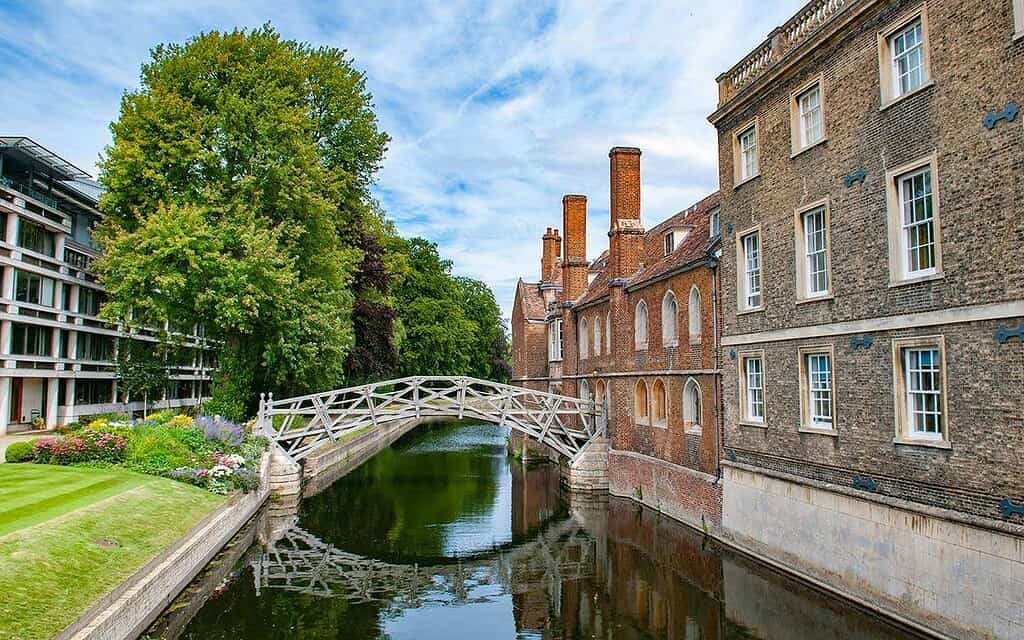
There is no canonical story to match the figure, which is perhaps what makes her the most haunting of Cambridge’s ghosts. She stares at the Cam, and the Cam carries on, and whatever happened to her the river is not going to tell you.
A note, in daylight
Every ghost story in Cambridge is a story about buildings that have been used continuously by the same kinds of people for the same kinds of reasons for the better part of a thousand years. Whether or not anything walks these courts after midnight, the stones themselves remember a great deal. You can feel it, in the old passages, even on a sunny afternoon.
Walk these streets with a guide who knows the stories
Our evening walking tours weave the ghost-lore in with the architecture and the scholarship — the version of Cambridge the postcards never quite show. Details and booking at cambridge.tours.