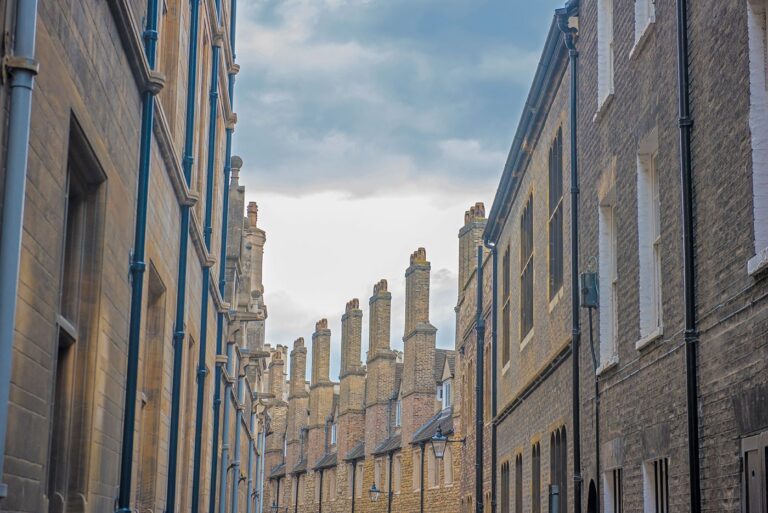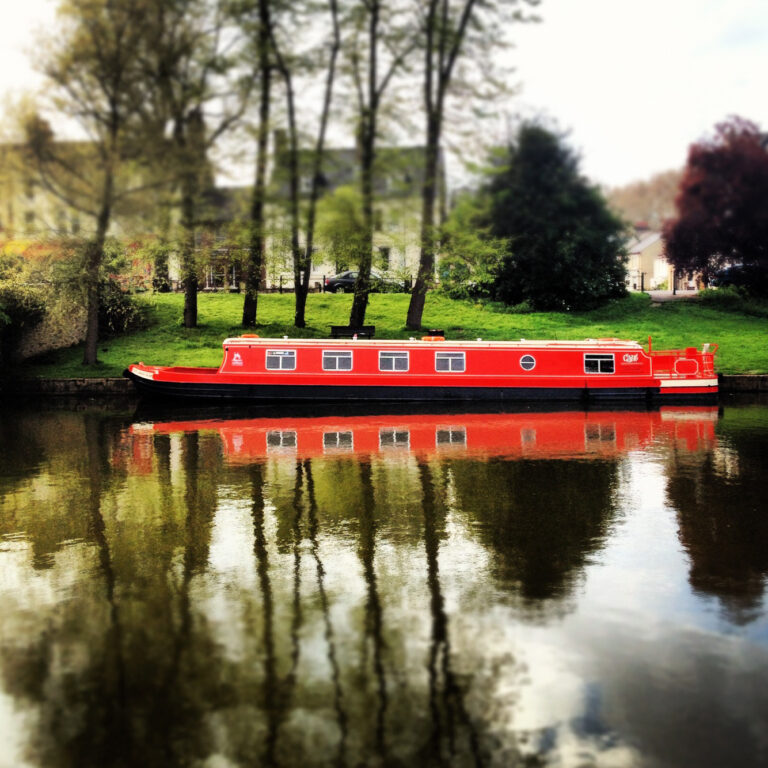
Cambridge is famous for its ancient university, its punts gliding along the River Cam, and its jaw-dropping architecture. But scratch beneath the surface of this 800-year-old city and you will find stories so strange they sound invented. As professional photographers who walk these streets every single day, we have collected the quirkiest, most photograph-worthy facts about Cambridge that will make you see this city in a completely new light.
1. A Giant Grasshopper Is Eating Time on Bene’t Street
Outside the Taylor Library at Corpus Christi College sits the Corpus Clock, one of the most mesmerising and unsettling public artworks in Britain. The face is a 24-carat gold-plated stainless steel disc, and perched on top is the Chronophage, a mechanical grasshopper-like creature that appears to devour each passing minute. The clock was unveiled by Stephen Hawking in 2008 and was deliberately designed to be accurate only once every five minutes, reminding us that time is precious and irregular. It is one of the most photographed objects in Cambridge, and for good reason. The play of light on that gold disc at sunset is extraordinary.
2. Lord Byron Kept a Pet Bear at Trinity College
When the Romantic poet Lord Byron arrived at Trinity College in the early 1800s, he wanted to bring his beloved dog. College rules, however, forbade dogs. Byron’s response was characteristically dramatic: he brought a tame bear instead, arguing there was no specific rule against it. The bear reportedly accompanied Byron on walks around the grounds. Lady Caroline Lamb’s famous description of Byron as ‘mad, bad and dangerous to know’ suddenly makes a lot more sense.
3. Cambridge Doesn’t Have Quadrangles
Visit Oxford and you will hear endless talk of ‘quads.’ Visit Cambridge and you will hear about ‘courts.’ Both refer to the same thing, a courtyard enclosed by college buildings, but Cambridge insists on its own terminology. Ask a Cambridge local why and the answer is reliably unhelpful: ‘Just because.’ This quiet stubbornness runs through the city’s character and is one of the many things that makes it endlessly charming.
4. The DNA Double Helix Was Announced in a Pub
In February 1953, Francis Crick walked into The Eagle pub on Bene’t Street during the lunchtime rush and declared to the assembled drinkers that he and James Watson had ‘discovered the secret of life.’ That secret was the structure of DNA. The Eagle still stands today, and a blue plaque commemorates the moment. What makes this story even more delightful is that Crick’s wife Odile, a lecturer at Cambridge School of Art, drew the original sketch of the double helix that appeared in their landmark paper.
5. Tiny Doors Are Hidden All Over the City
Since 2019, miniature doors have been appearing in the most unexpected corners of Cambridge. Known as Dinky Doors, these tiny sculptures are tucked into walls, between phone boxes, and alongside college entrances. There are currently fourteen scattered across the city, including a tiny 10 Downing Street complete with purple tentacles and a steampunk teleportation device. They were created to, in the words of their maker, ‘defend against the daily onslaught of miserable miserableness.’ Finding and photographing them all has become a beloved Cambridge treasure hunt.
6. Newton’s Apple Tree Still Grows Here
Outside the Great Gate of Trinity College stands an apple tree grafted from the very tree at Woolsthorpe Manor in Lincolnshire where Isaac Newton supposedly watched an apple fall and began pondering gravity. You cannot walk on the grass to get close to it (this is Cambridge, after all) but it makes for a wonderful photograph from the path, particularly in autumn when the leaves turn golden.
7. The Mathematical Bridge Wasn’t Built by Newton
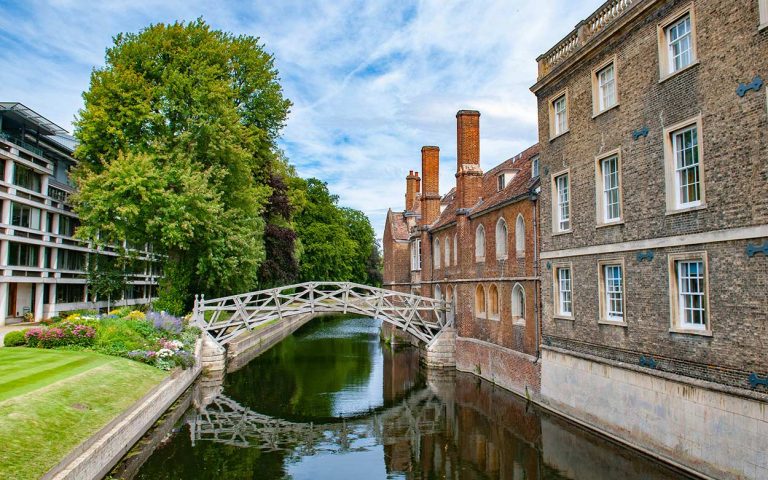
One of the most persistent myths in Cambridge is that Isaac Newton designed the Mathematical Bridge at Queens’ College without using any bolts or screws, and that curious students took it apart to see how it worked and could never reassemble it without fasteners. The truth is rather less dramatic: the bridge was designed by William Etheridge in 1749, a good twenty-two years after Newton’s death. It has always used bolts. But the geometric beauty of its tangent-and-radial design makes it one of the most photographed bridges in England, myth or no myth.
8. Cambridge Invented the Rules of Football
Modern football owes its existence partly to Cambridge. In 1848, the first standardised rules of the game were drawn up at the university, played on Parker’s Piece, and became known as the Cambridge Rules. These formed the foundation for the Football Association’s official rules in 1863. Today Parker’s Piece is a vast green common in the centre of the city, popular with picnickers and frisbee players who probably have no idea they are standing on the birthplace of the beautiful game.
9. One of Only Four Round Churches in England Stands Here
The Church of the Holy Sepulchre, known locally as The Round Church, is one of only four surviving round churches in England and the second-oldest building in Cambridge. Its circular design was inspired by the Church of the Holy Sepulchre in Jerusalem, built by Constantine the Great in the fourth century. The interior light is extraordinary for photography, particularly on bright mornings when sunlight pours through the Norman arches.
10. The City Is a Secret Film Star
Cambridge’s photogenic streets have been the backdrop for dozens of films and television series. The city has doubled for various locations in productions ranging from period dramas to modern thrillers. Its combination of medieval architecture, manicured lawns, and atmospheric light makes it irresistible to location scouts. Next time you watch a scene set in an impossibly beautiful English college, there is a decent chance it was filmed here.
11. There Are More Bikes Than People
Cambridge is the undisputed cycling capital of the United Kingdom. With a population of around 145,000, the city has an estimated bike-to-person ratio that is the highest in the country. Entire streets have been designed around cyclists, and if you stand on any Cambridge bridge for five minutes you will see more bicycles than cars. For photographers, the sight of hundreds of bikes chained to every available railing, fence, and lamppost is one of Cambridge’s most iconic and photogenic features.
12. Silicon Fen Is a Real Thing
Cambridge is not just about ancient history. The city has quietly become one of Europe’s leading technology hubs, nicknamed Silicon Fen. Roughly eighteen percent of the UK’s computer gaming industry is based here, alongside hundreds of science and technology companies, some valued in the billions. This blend of medieval architecture and cutting-edge innovation gives Cambridge a unique atmosphere that you simply do not find in other historic cities.
Want to discover these quirky corners of Cambridge for yourself? Our professional photography tours take you beyond the tourist trail to the hidden stories, secret angles, and perfect light that make this city extraordinary. Book your Cambridge photo tour at cambridge.tours and see the city through a photographer’s eyes.