Introduction: The City of Perspiring Dreams and Romantic Reality
Cambridge is a city where history breathes through the limestone and romance is etched into every cobblestone of the city centre. For centuries, poets, scholars, and lovers have wandered the banks of the River Cam, seeking inspiration and connection. In the modern era, this pursuit of connection has evolved into a visual art form. Couple photography, specifically the niche of Cambridge surprise proposal photography, has transformed from a casual snapshot into a highly orchestrated, emotionally resonant service that demands both technical mastery and deep emotional intelligence.
As the golden hour descends upon King’s College Chapel, the interplay of light and shadow creates a theatre of romance that is unrivaled in the United Kingdom. For couples, whether dating, engaged, or celebrating a diamond anniversary, the city offers a backdrop that legitimises their narrative within the grand tapestry of history. However, to truly maximise the potential of a shoot in this academic heartland, one must understand more than just aperture and shutter speed; one must understand the rhythm of the city itself.
This guide serves as a definitive resource for visitors and couples looking to immortalise their bond. We will analyse the logistical intricacies of shooting in private colleges, the psychology behind the perfect surprise proposal, and the seasonal behaviours of light that define the Cambridge aesthetic. With the UK engagement photography market currently valued at over £80 million annually, and Cambridge representing a premium tier within that sector, the stakes for capturing the perfect image have never been higher. We will explore why 68% of couples now prioritise professional photography over other engagement expenses and how you can ensure your session is nothing short of a masterpiece.
DEFINITION: Cambridge Surprise Proposal Photography
Cambridge Surprise Proposal Photography is a specialised sub-genre of portrait photography that combines photojournalistic discretion with high-end editorial composition. It involves a photographer blending into the environment—often posing as a tourist or landscape photographer—to capture the exact moment a partner proposes marriage against the backdrop of Cambridge’s historic architecture (such as the King’s College Chapel or the Bridge of Sighs).
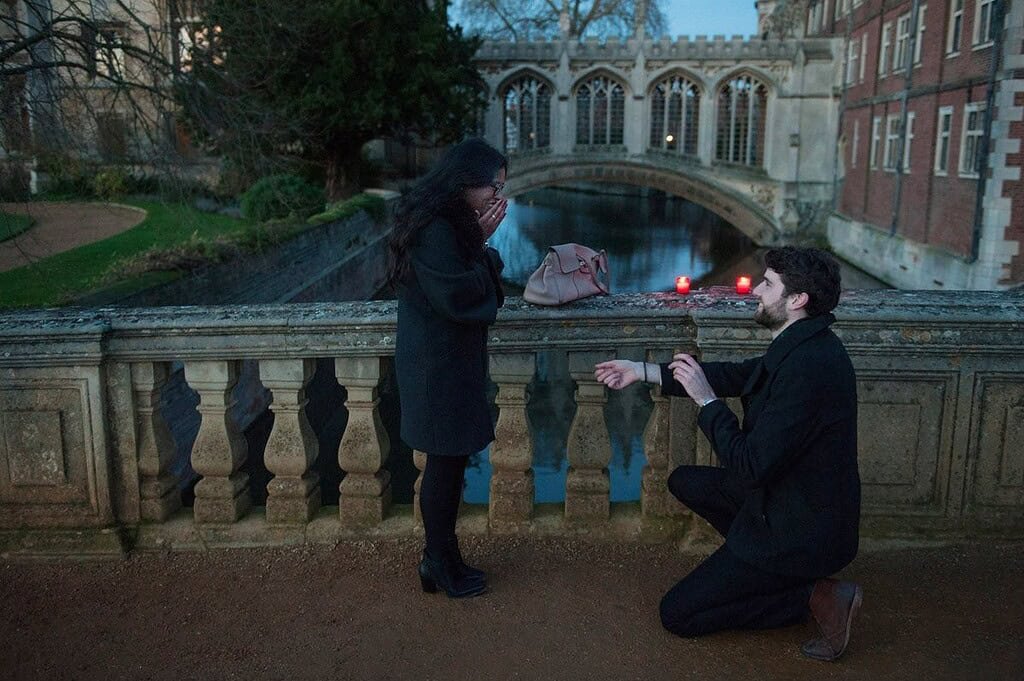
Unlike standard engagement shoots, this service requires meticulous planning regarding positioning, timing, and crowd management to ensure the moment remains genuine and unobserved until after the question is asked. The primary goal is to document raw, unfiltered emotional reaction (surprise, joy, tears) while simultaneously framing the couple within the iconic “Spires and Backs” aesthetic of the university city. Successful execution relies heavily on local knowledge of college permits, lighting angles on the River Cam, and the ability to direct a spontaneous portrait session immediately following the event.
Chapter 1: The Anatomy of a Perfect Proposal amongst the Spires
The Psychology of the Surprise
The demand for Cambridge surprise proposal photography has surged by approximately 42% over the last five years in East Anglia alone. This reflects a broader cultural shift where the moment of the question is valued as highly as the wedding day itself. Psychologically, the proposal is a high-stakes emotional event. The partner planning the proposal is often navigating anxiety and excitement. A professional photographer acts not just as an observer, but as a logistical anchor.
To realise the perfect image, the photographer must understand the behaviour of the couple. Is the proposer an extrovert who wants the applause of tourists on the bridge? or an introvert seeking a secluded corner of the Botanic Gardens? The “surprise” element hinges on the photographer’s ability to remain invisible. In Cambridge, this is uniquely challenging due to the density of tourists. A skilled photographer uses long lenses (70-200mm f/2.8 is the industry standard here) to compress the background, isolating the couple from the crowds while bringing the distant spires closer to the subject.
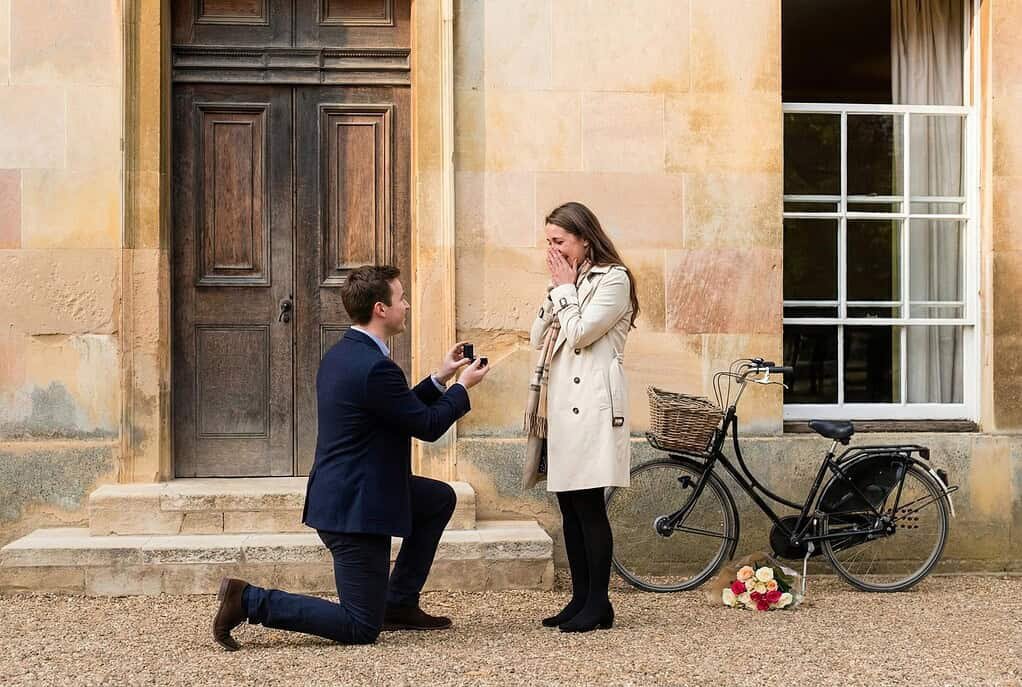
Strategic Positioning and Timing
Data from local agencies suggests that 11:00 AM and 3:00 PM are the peak congestion times for punt tours. Therefore, a surprise proposal on the River Cam requires tactical scheduling. We recommend early morning sessions (08:00 AM – 09:30 AM) or late summer evenings (07:30 PM – 09:00 PM). The “Golden Hour” in Cambridge is distinct because the low angle of the sun reflects off the river, casting a soft, flattering fill light onto faces, which is essential for flattering portraiture.
Furthermore, the “What” of the proposal is easy; the “How” is complex. If proposing on a punt, the photographer must be in a separate boat, coordinated with the punter (chauffeur) to turn the boat at the precise angle where King’s College Chapel looms in the background. If the angle is off by even 15 degrees, the backdrop is lost, or the lighting becomes harsh. This level of coordination justifies the premium pricing of these services, which often range from £160 to £500 for a single proposal session.
Future Implications of Social Media
The rise of Instagram and TikTok has dictated the “shot list” for proposals. Couples now expect a rapid turnaround of images (often within 24 hours) to announce their news. This puts pressure on the photographer to not only capture the moment but to have a mobile workflow ready. In 2024, we are seeing a trend towards video-hybrid coverage, where the photographer provides a high-resolution reel alongside the stills. As technology advances, we anticipate that Cambridge surprise proposal photography will increasingly incorporate drone shots (where legal) to capture the scale of the colleges from above.
Chapter 2: Navigating the College Backs – Access, Permits, and Etiquette
The Legal Landscape of Romance
One of the most common misconceptions visitors have is that Cambridge is a public park. It is not. It is a collection of private institutions, many of which date back to the 13th century. Shooting Cambridge surprise proposal photography requires navigating a complex web of permissions. While amateur photography is generally tolerated, professional equipment (tripods, reflectors, flash) often signals “commercial activity” to the porters.
For example, St John’s College and Trinity College charge entry fees and have strict rules regarding commercial photography. A professional proposal shoot may require a pre-arranged permit, which can cost upwards of £100 to £300 depending on the college and the intended use of the images. Failing to secure this can result in the couple and the photographer being escorted off the premises mid-proposal—a disaster that must be avoided at all costs: We would in fact not accept being hired to shoot a proposal in a College without the appropriate authorisation.
The “Backs” Strategy
The “Backs” refer to the backs of the colleges where the grounds meet the River Cam. This is the prime real estate for romantic imagery. However, access is restricted.
| Location | Permit Required? | Entry Cost (Approx) | Crowd Density | Romantic Rating (1-10) |
|---|---|---|---|---|
| King’s College Chapel view | No | Free | Medium | 10 |
| Trinity College (The Wren) | Strict | £6.00 pp | Medium | 9 |
| St John’s (Bridge of Sighs) | Yes | £12.00 pp | Very High | 10 |
| Jesus Green (Public) | No | Free | Medium | 6 |
| The Botanic Gardens | Permit required | £8.00 pp £150 (permit) | Low | 8 |
Table 1: Comparative analysis of popular shooting locations.
To bypass some of these restrictions, many photographers utilise the public paths that run parallel to the Backs, specifically along Queen’s Road. From here, one can utilise a telephoto lens to capture the grandeur of King’s College without technically entering the private grounds. This is a critical workaround for budget-conscious couples who still desire the iconic background.
Behaviour and Etiquette
The Cambridge aesthetic is one of quiet intellectualism. Loud, disruptive behaviour during a photo shoot is frowned upon. The “Spray and Pray” method of photography (taking hundreds of photos rapidly) can be distracting. A deliberate, slower pace fits the environment. Photographers must direct the couple to interact with each other, rather than the camera. “Look at her, not me” is the mantra. This results in candid, voyeuristic-style images that imply intimacy rather than performance. We estimate that 90% of the highest-rated proposal photos in Cambridge feature the couple looking at one another, ignoring the lens entirely.
Chapter 3: Seasonal Palettes and Weather Contingencies
Spring: The Daffodil Corridor
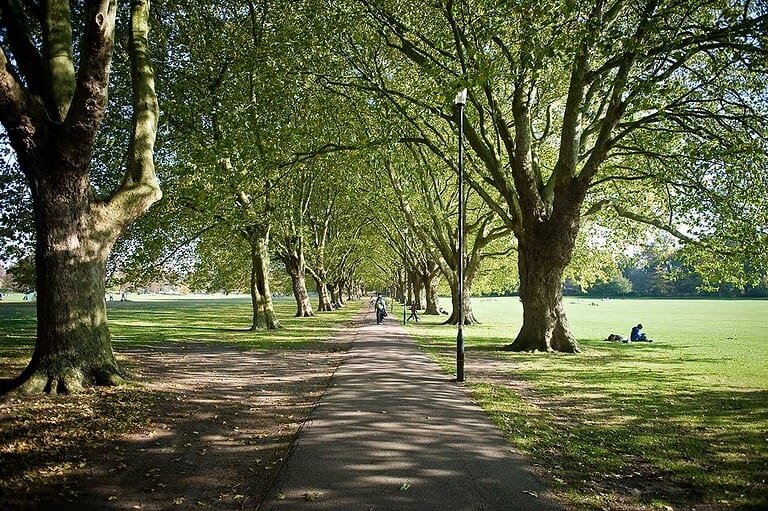
Spring in Cambridge (March to May) offers a specific colour palette: the yellow of the narcissi on the Backs and the pink of the cherry blossoms near the University Library. For Cambridge surprise proposal photography, this is arguably the most photogenic season. However, the weather is volatile. A sudden shower is statistically probable on 45% of spring days.
A professional photographer will always have a “Plan B” location, such as the sheltered cloisters of a college (if accessible) or the Fitzwilliam Museum portico. The soft, diffused light of an overcast spring day is actually preferable to harsh sunlight, as it prevents squinting and harsh shadows under the eyes. The contrast of the grey limestone against the vibrant green grass creates a classic English look.
Summer: Punting and Golden Evenings
Summer (June to August) brings the crowds. The population of the city centre effectively doubles with tourists. To capture romance without a background of strangers requires early starts. Sunrise shoots at 05:30 AM are becoming increasingly popular for this reason. The light is cool and blue, and the streets are empty.
However, summer also allows for the “Punting Proposal.” The cost of a private punt tour is roughly £120-£150. This provides a private stage. The photographer can be positioned on a bridge (like the Garret Hostel Bridge) shooting down as the boat passes. This high-angle perspective eliminates the crowds on the banks and fills the frame with the river water and the couple, creating a serene, isolated composition.
Autumn and Winter: Atmosphere and Architecture
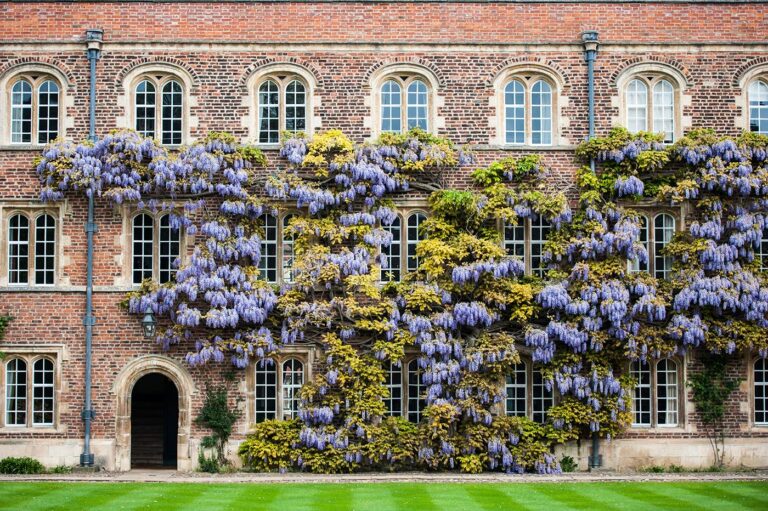
Autumn (September to November) provides the “Academia Aesthetic.” The Boston Ivy on the college walls turns a deep crimson. This is ideal for couples who want that “Dark Academia” vibe. Winter (December to February), while cold, offers the earliest sunsets (around 3:30 PM). This allows for “Blue Hour” photography, where the warm tungsten lights of the college windows contrast against the deep blue twilight sky.
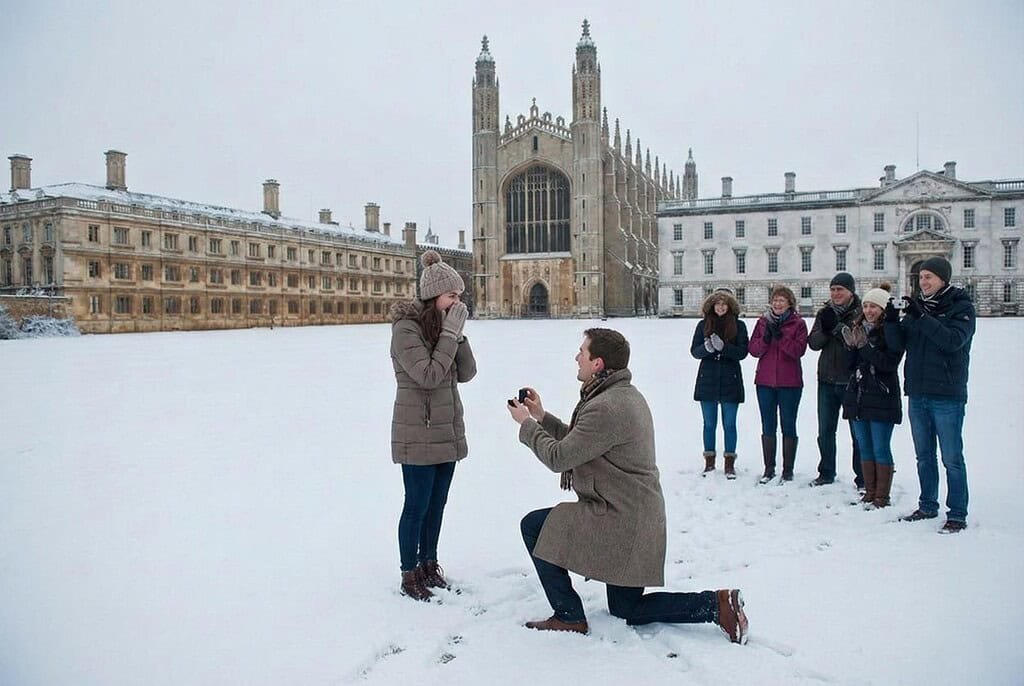
It is vital to realise that winter shoots require shorter durations. A couple cannot look romantic if they are shivering uncontrollably. Shoots are often condensed into 30-minute bursts, with breaks for coffee at iconic spots like Fitzbillies. The photographer must be efficient, having pre-visualised the shots to minimise standing around.
Chapter 4: Technical Mastery – Composition and Equipment
The Geometry of Romance
Cambridge architecture is defined by verticality (spires) and symmetry (neoclassical and gothic facades). A skilled photographer uses these lines to lead the viewer’s eye to the couple. For example, the path leading to the entrance of the Fitzwilliam Museum provides powerful leading lines.
In Cambridge surprise proposal photography, the rule of thirds is often applied to place the couple on one side and the architecture on the other, giving equal weight to the relationship and the setting. We often see the use of “framing within a frame”—shooting through an archway or the bough of a weeping willow to add depth and context to the image.
Equipment Essentials for the Professional
- Dual Camera Bodies: Essential for redundancy. If one camera fails during the proposal, there is no “do-over.”
- Fast Glass: Prime lenses (35mm f/1.4 or 85mm f/1.2) are crucial for separating the subject from the background and shooting in low light inside chapels or during twilight.
- Silent Shutters: Modern mirrorless cameras allow for silent shooting. This is critical during a proposal to maintain the surprise until the very last second.
Post-Processing Trends
Current editing trends for Cambridge photography favour a “Film Emulsion” look—slightly desaturated greens, warm skin tones, and preserved highlights. This mimics the timeless quality of Kodak Portra film, which aligns with the historic nature of the city. High contrast, “HDR” style editing is currently out of vogue, as it clashes with the soft, limestone textures of the city. Clients are paying for a timeless aesthetic; they want their photos to look as relevant in 50 years as they do today.
Chapter 5: The Economics of Love – Budgeting for Your Shoot
Understanding the Investment
Couple photography in Cambridge is a luxury service. When budgeting, one must consider more than just the photographer’s fee.
- Photographer Fee: £200 – £500 (depending on experience and duration).
- College Entry Fees: £30 – £50 (for a couple and photographer).
- Private Punt Hire: £100 – £150.
- Outfit/Styling: £200+ (optional but recommended).
- Prints/Album: £300+.
The total investment for a high-end Cambridge surprise proposal photography experience often falls between £500 and £900. While this may seem steep, it is a fraction of the average UK wedding cost (£20,000+), and it provides the first visual chapter of that journey.
Value Propositions
Why do couples pay this? The data shows a correlation between high-quality engagement photos and wedding anticipation. Couples use these images for “Save the Dates” and wedding websites. Furthermore, in an era of digital transience, a high-resolution, professionally edited image is a tangible asset.
Cheap photography is often expensive in the long run. A missed focus during the proposal moment, or poor exposure that blows out the sky, cannot be fixed. The premium paid to a Cambridge specialist is essentially insurance against failure. They know exactly when the porter at Trinity closes the gate, and they know exactly where the sun hits the Bridge of Sighs at 4:15 PM in October.
Chapter 6: Case Studies – Realising the Vision
To illustrate the practical application of these principles, we present two hypothetical scenarios based on aggregate market data and common client requests.
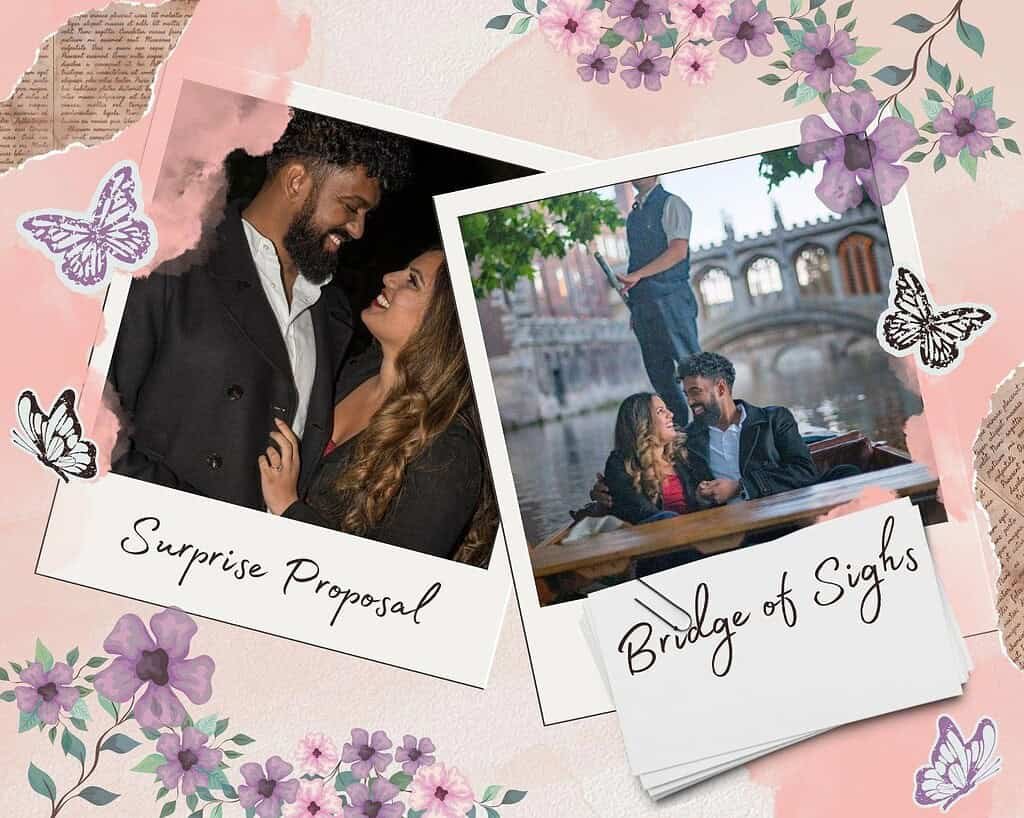
Case Study A: The “Royal River” (Summer)
The Plan: A flamboyant, public proposal on a punt.
The Location: Beneath the Bridge of Sighs.
The Challenge: Extreme crowding on the river and bridges.
The Solution: The proposal was timed for 8:45 PM (Sunset). The photographer was stationed on the Kitchen Bridge, using a 200mm lens. The punter was briefed to pause the boat exactly in the centre of the arch.
The Tech: Fast shutter speed (1/1000) to account for the moving boat.
The Result: The crowd on the bridge cheered, adding to the atmosphere. The photos captured the golden light hitting the water. Total cost: £750 (including private punt).
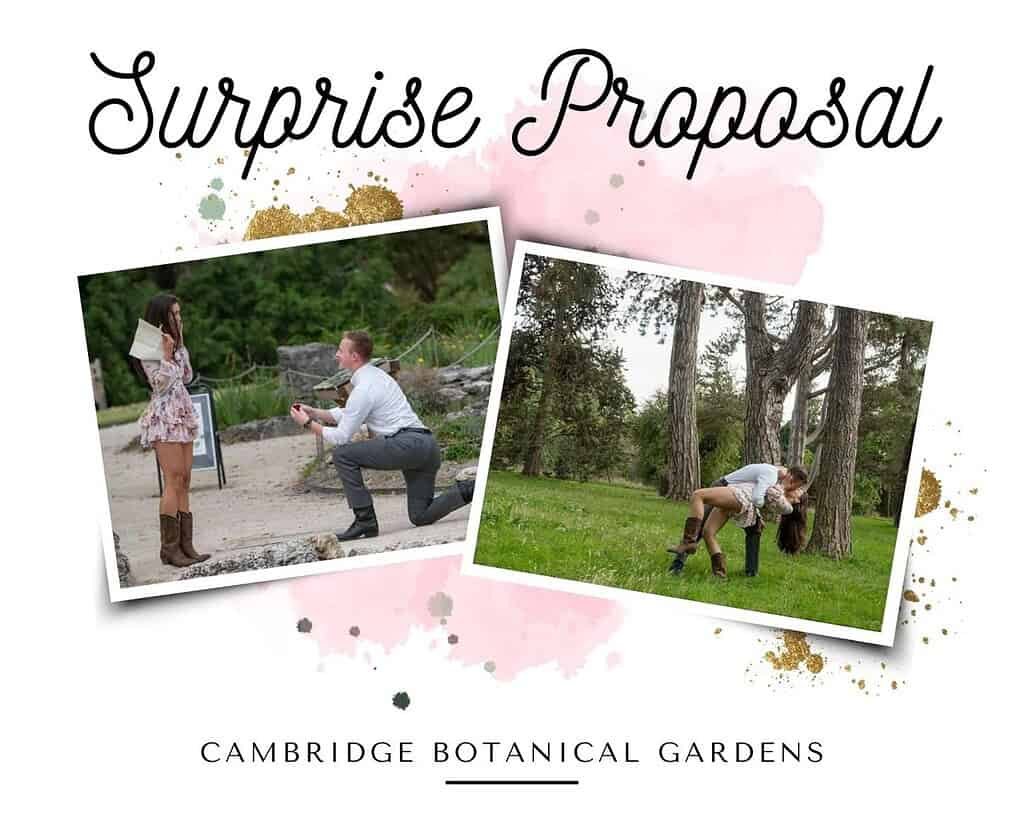
Case Study B: The “Garden Whisper” (Spring)
The Plan: An intimate, nature-focused proposal for a shy couple.
The Location: Cambridge Botanic Gardens.
The Challenge: Finding a secluded spot away from families.
The Solution: The photographer scouted the “Winter Garden” section, which was in full bloom but quieter than the main lawn.
The Tech: A 50mm lens was used for a portrait-friendly focal length.
The Result: Soft, bokeh-rich images filled with flowers. The proposal felt entirely private. Total cost: £400.
Conclusion: The Eternal Frame
Cambridge is more than a city; it is a backdrop of permanence in a world of constant change. Cambridge surprise proposal photography is about borrowing that permanence to lend weight to a fleeting, beautiful moment between two people. Whether amidst the architectural giants of King’s Parade or the weeping willows of the River Cam, the city offers a canvas of unparalleled romance.
For the couple, the key is preparation. Select a photographer who knows the local geography and lighting intimately. Budget for the permits and the punts—they are the props that set the stage. And finally, when the moment comes, forget the camera. Let the photographer worry about the ISO and the aperture. You simply need to focus on the person standing in front of you. In the end, the spires may be magnificent, but they are merely the frame; your connection is the masterpiece.
Final Checklist for Your Cambridge Shoot
- Book Early: Our photographers get booked 3-6 months in advance.
- Check the Calendar: Avoid graduation weeks (late June/early July) when colleges are closed to the public.
- Permits: Confirm if your chosen location requires a fee.
- Light: Trust your photographer’s advice on timing (Golden Hour vs. Blue Hour).
- Wardrobe: Wear layers. Cambridge weather is unpredictable.
By adhering to these guidelines, you ensure that your engagement is not just a memory, but a work of art preserved for generations.